Pier-and-beam properties throughout The Heights, Montrose, and West University Place rely on subfloor airspace for ventilation, yet elevated regional humidity often sustains moisture levels above 20% in floor joists.…
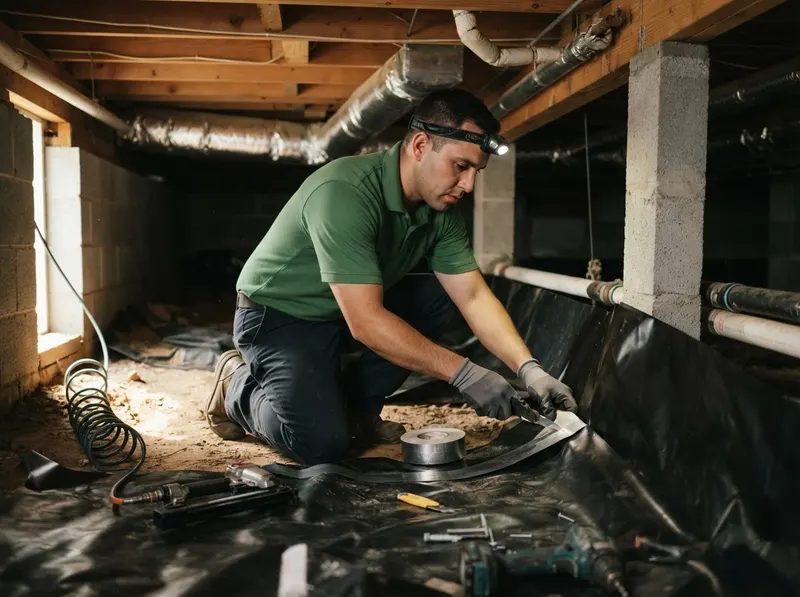
Pier-and-beam properties throughout The Heights, Montrose, and West University Place rely on subfloor airspace for ventilation, yet elevated regional humidity often sustains moisture levels above 20% in floor joists. At this saturation threshold, subterranean termites and structural wood-rot fungi thrive simultaneously. Crawlspace pest barrier and moisture defense prevents structural wood decay and eliminates pest entry pathways by decoupling damp ground soil from structural lumber. High-density polyethylene membranes seal exposed dirt, while 1/4-inch galvanized steel wire mesh prevents rodent entry at external foundation vents without restricting necessary airflow.
Selecting crawlspace encapsulation with active dehumidification fits properties with severe seasonal standing water or micro-elevations, whereas installing a Class I vapor ground barrier combined with targeted chemical exclusion fits homes with functional existing drainage. The operational trade-off centers on upfront mechanical equipment investment versus passive airflow management: fully sealed encapsulated systems require dedicated electrical circuits and regular mechanical monitoring, while passive heavy-mill ground barriers preserve natural under-house cross-ventilation across flood-prone terrain like Meyerland and Buffalo Bayou Park flood zones.
Older architectural stock in River Oaks, Memorial, and Oak Forest frequently presents subfloor gaps around plumbing drops, cast-iron drain lines, and electrical conduits. Unsealed penetrations allow American cockroaches and rodents to migrate directly from damp soil into interior wall cavities. Protective barriers address these specific vulnerabilities through a clear, numbered sequence: 1. Technicians clear raw organic debris and cellulose scrap from the ground. 2. A continuous, puncture-resistant ground barrier is pinned and taped across the earth and up masonry foundation piers. 3. Wood joists and subfloors receive targeted borate-salt mineral treatments that resist insect feeding. 4. Specialized expanding structural foams infused with pest-deterrent compounds seal all subfloor penetrations.
Every job gets a firm, written price after a free on-site visit.
Tell us about your crawlspace pest barrier and moisture defense job in Houston and we'll send a clear, written quote, usually the same day.
 Homestead Pest Control