Securing an authoritative pest control service Houston homeowners can depend upon requires targeted mechanical exclusion, precise microencapsulated chemical perimeters, and specialized moisture abatement tailored strictly to Gulf Coast insect biology. The uninterrupted subtropical humidity and heavily expansive clay soil series throughout Harris County create persistent migration corridors for subterranean termites, American cockroaches, and tree-dwelling roof rats seeking reliable harborage inside slab foundations and attic assemblies.
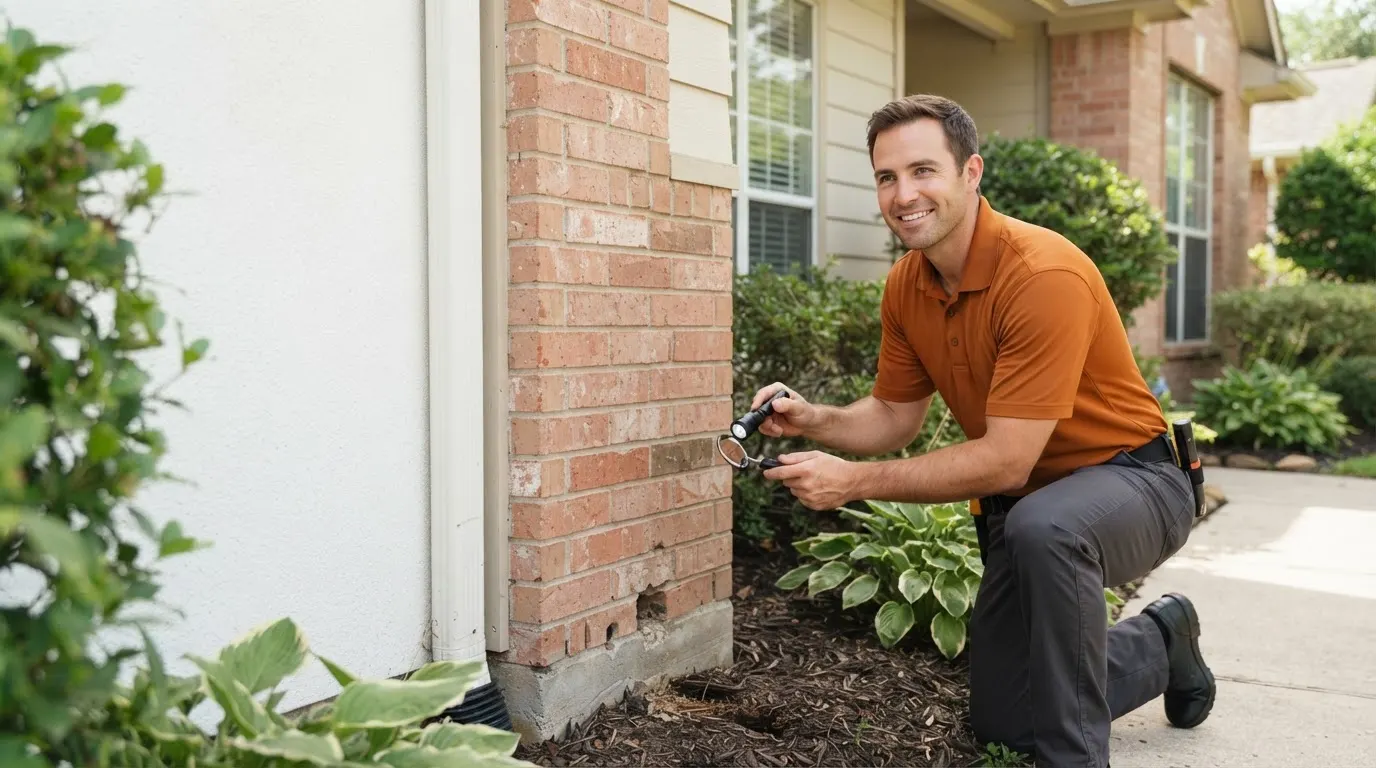
Pest control service in Houston is a specialized environmental management, biological monitoring, and structural remediation discipline that locates, suppresses, and mechanically excludes wood-destroying, disease-carrying, and invasive organisms from residential properties across Harris County.
Every service reflects the same meticulous attention to detail, whether it's a single job or a larger pest control service project across Houston.
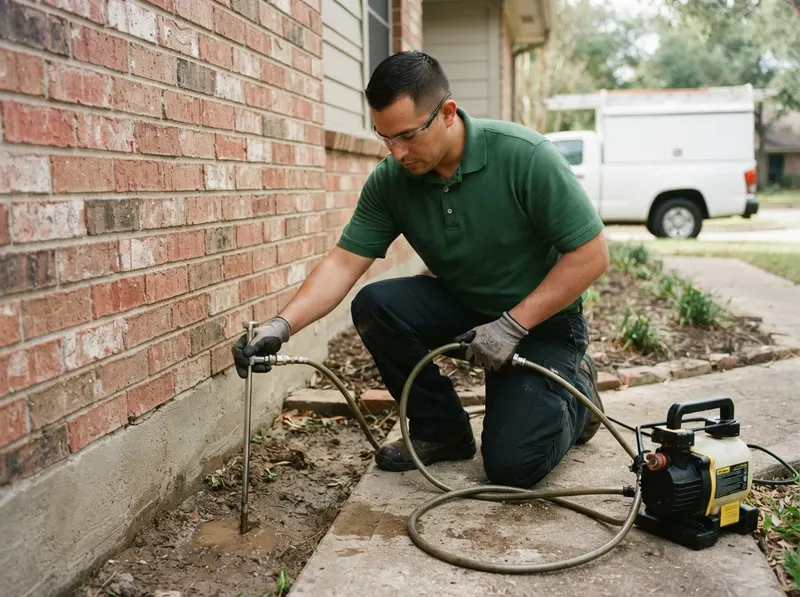
Subterranean termites, including native reticulitermes species and aggressive Formosan colonies, cause severe structural framing damage across Greater Houston by infiltrating hidden foundation expansion joints, slab cracks, and bath trap voids. Defense protocols establish an unbroken non-repellent liquid chemical barrier in the perimeter soil using high-affinity termiticides such as fipronil, or deploy tamper-resistant subterranean bait stations installed at uniform 10-foot intervals around the structural foundation. When homes feature attached concrete patios, carports, or masonry porches, technicians drill vertical 1/2-inch ports through the slab every 12 inches to pressure-inject liquid chemistry directly into subterranean fill dirt. This systemic intervention prevents foraging worker termites from constructing earthen shelter tubes toward load-bearing wall studs, sill plates, and ceiling joists.
Get a quote →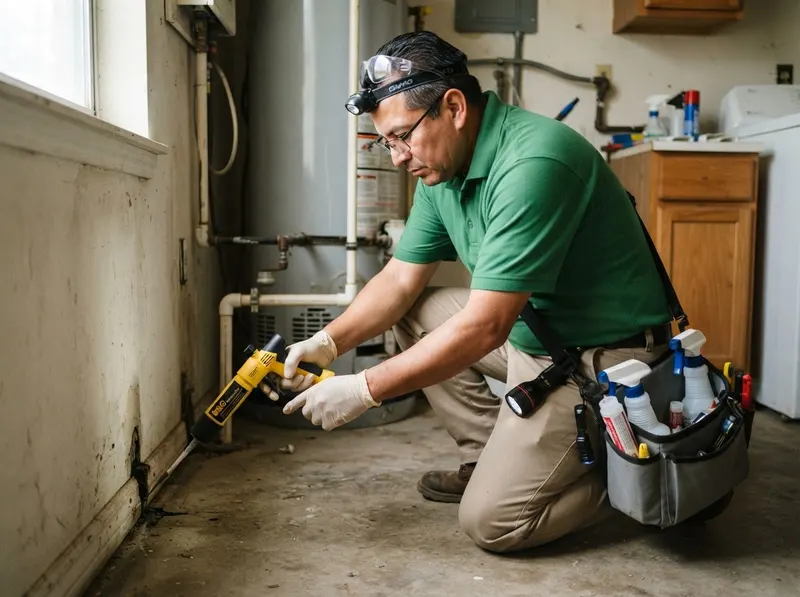
Houston's prolonged summer heat and year-round elevated indoor humidity accelerate cockroach metabolism and reproductive velocity, pushing peri-domestic American cockroaches up through city sewer lines and driving German cockroaches to colonize kitchen cabinetry. Remediation incorporates a multi-tier cleanout protocol featuring targeted microencapsulated insect growth regulators that disrupt nymph molting cycles, low-toxicity non-repellent transfer sprays applied behind heavy appliances, and precision placement of abamectin or indoxacarb gel baits in moisture-rich cabinet hinges and plumbing chases. Exterior perimeters are treated with hydrophobic synthetic pyrethroids along weep-hole vents, door thresholds, foundation interfaces, and adjacent landscape mulch beds, permanently cutting off outdoor-to-indoor travel highways.
Get a quote →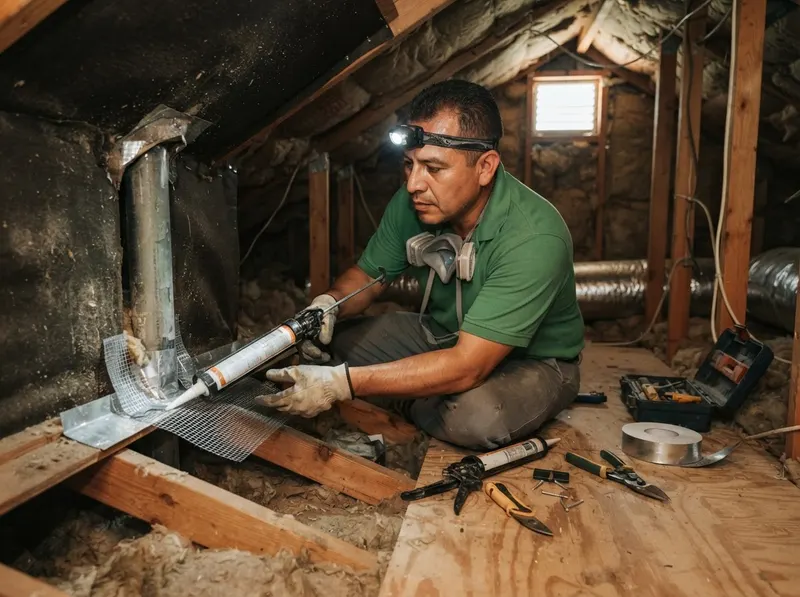
Roof rats and Norway rats exploit tree limbs overhanging residential roof assemblies, unsealed frieze-board gaps, open soffit vents, and AC line-set penetrations to gain access to warm attic spaces. Eradication begins with complete exterior building envelope exclusion using 1/4-inch hot-dipped galvanized steel hardware cloth, metal flashing, and steel wool composite compounds to seal every opening exceeding 1/4 inch in diameter. Interior populations are systematically removed through targeted mechanical snap trapping placed along documented attic travel runways, strictly avoiding loose rodenticide baits that cause pests to expire inside enclosed interior walls. Comprehensive post-trapping sanitation incorporates the vacuum removal of biohazardous droppings, the application of broad-spectrum bio-enzymatic deodorizers, and the misting of virucidal disinfectants to neutralize pheromones and pathogen residues.
Get a quote →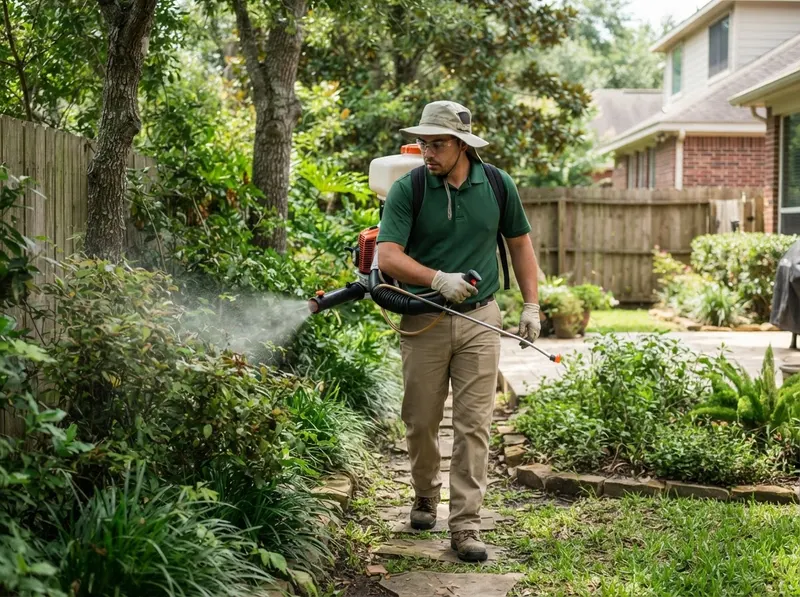
Properties situated near slow-moving bayous, regional drainage swales, and dense subtropical tree canopies endure aggressive populations of Aedes albopictus and Culex quinquefasciatus mosquitoes capable of spreading West Nile virus. Exterior suppressive treatments utilize gas-powered mist blowers to apply microencapsulated adulticides and insect growth regulators to the undersides of dense broadleaf foliage, shaded under-deck cavities, covered patio ceilings, and perimeter fence lines where mosquitoes rest during daytime heat. Technicians simultaneously identify non-draining yard depressions, uncleaned gutter runs, and landscape catch basins, treating standing water with biological larvicide briquettes containing Bacillus thuringiensis israelensis to destroy larvae before adult pupation occurs.
Get a quote →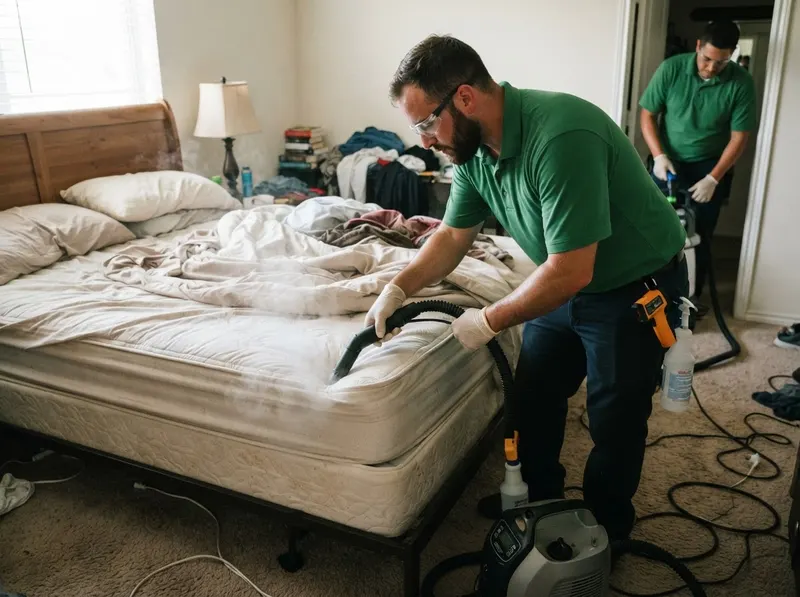
Bed bug introductions into Houston residences require immediate, aggressive intervention before female specimens deposit adhesive egg clusters inside baseboard hollows, hollow curtain rods, electrical junction boxes, and interior carpet tack strips. Treatment strategies combine precise high-heat forced-air convective systems or focused commercial-grade steam applications across mattress tufts and bed frames with targeted residual desiccant dusts such as amorphous silica gel inside wall cavities. Liquid contact and residual products are systematically applied along floor-to-wall interfaces, bed frame anchor points, and headboard mounts. Mandatory structural follow-up evaluations conducted at 14 and 21 days verify the total disruption of newly emerged nymphs, restoring healthy sleep environments without the unnecessary disposal of expensive furniture.
Get a quote →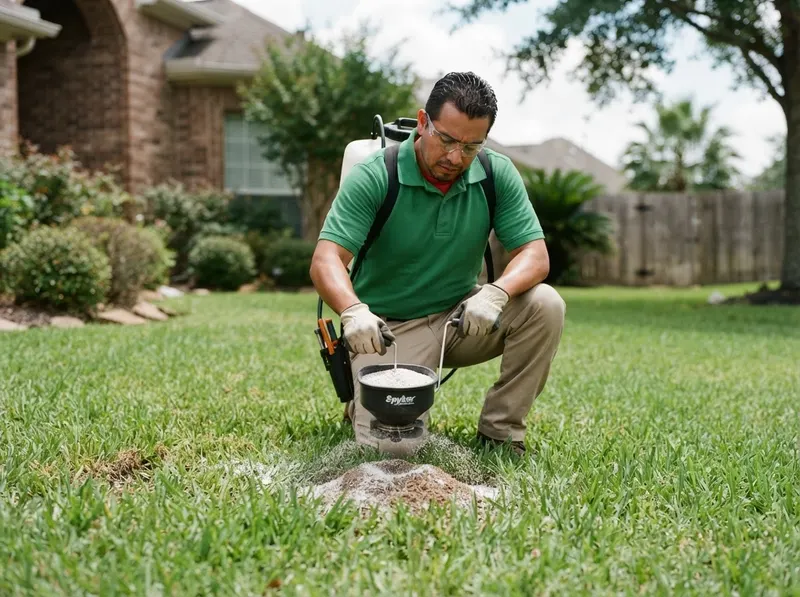
Red imported fire ants establish vast subterranean networks throughout Harris County's clay turf, forming aggressive stinging colonies that damage electrical transformer units, dislodge paver stones, and prevent family use of residential outdoor spaces. Turf defense employs an integrated two-phase systemic strategy: an initial broadcast application of an insect growth regulator bait containing s-methoprene or pyriproxyfen across entire lawn perimeters, allowing foraging worker ants to carry the active chemistry down to the reproductive queen, followed by localized high-volume drenching of hyper-active structural mounds using fast-acting contact actives. Scheduled bi-annual broadcast treatments maintain continuous juvenile hormone disruption, halting colony re-infestation following major Gulf Coast rain events.
Get a quote →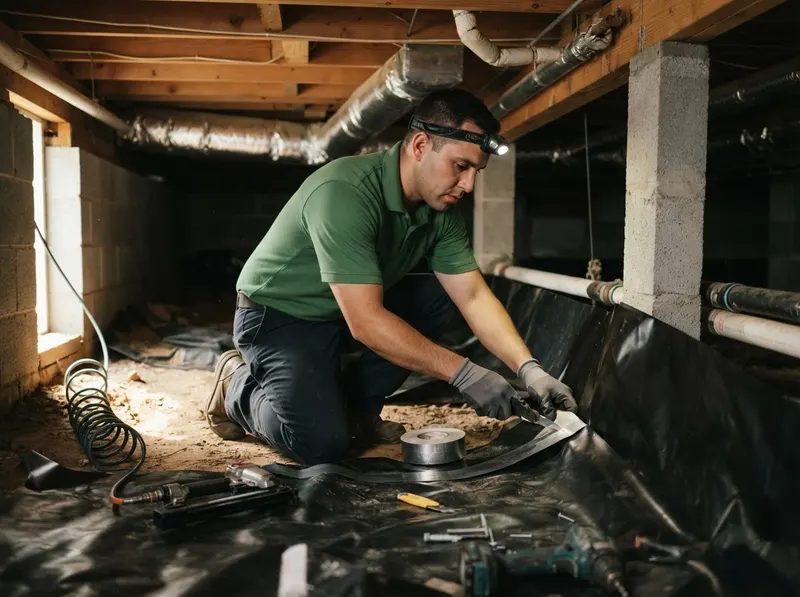
Elevated pier-and-beam homes constructed across historic Houston neighborhoods face severe dampness issues due to ambient ground moisture, seasonal water pooling, and inadequate cross-ventilation. Crawlspace remediation addresses these conditions by laying a seamless 10-mil to 20-mil cross-laminated polyethylene vapor retarder across exposed ground soil, mechanically securing and sealing seams up support piers and perimeter foundation walls. Technicians treat all exposed structural subflooring, sills, and framing timber with concentrated disodium octaborate tetrahydrate solutions to permanently prevent dry rot fungus, powderpost beetles, and subterranean termite colonization, while securing foundation crawlspace vents with rigid wire mesh to block entry by larger pests.
Get a quote →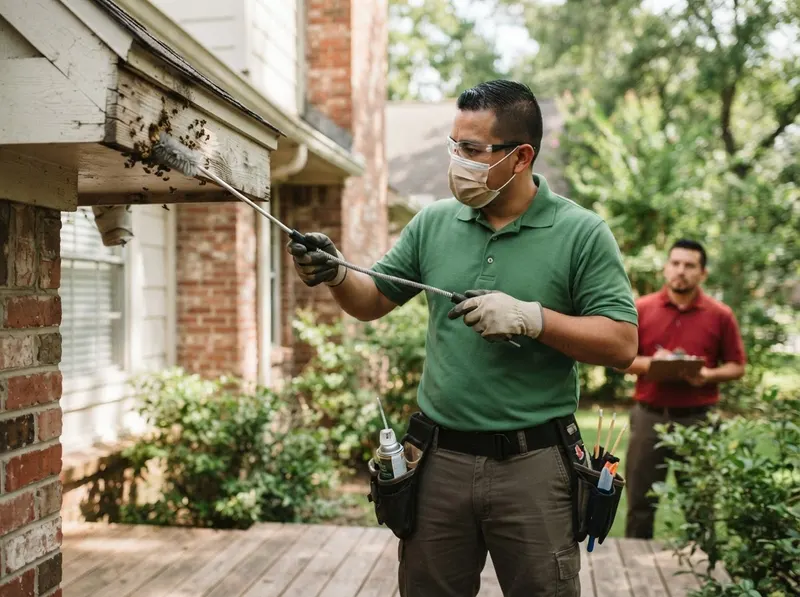
Paper wasps, mud daubers, bald-faced hornets, and solitary carpenter bees construct hazardous nests beneath open porch rafters, exterior soffits, window dormers, and unpainted cedar trim throughout Houston's eight-month warm season. Technicians systematically neutralize aerial hives utilizing high-reach pressurized aerosol applicators and specialized pyrethroid insecticidal dusts delivered directly into nest cavities. For carpenter bee infestations, individual 1/2-inch gallery entrance holes drilled into structural fascia boards are injected with concentrated residual dust formulations to eradicate adult females and developing larvae, after which holes are permanently plugged with treated hardwood dowels to prevent ongoing structural water intrusion.
Get a quote →You get a firm, itemized quote for your pest control service before any work begins, no surprises, no pressure.
Careful prep, tidy work, and a full cleanup when we are done. We treat your home and belongings like our own.
The same trusted, background-checked team from the first call to the final check.
Determining the correct structural pest defense strategy requires balancing architectural foundation type, perimeter vegetation proximity, and targeted biological threat levels across Harris County properties. If an inspection reveals active earthen mud tubes running up concrete grade beams, subterranean exploratory galleries behind baseboards, or hollowed framing timber, property owners should choose dedicated non-repellent liquid termiticide perimeter trenching or an exterior bait matrix network rather than routine surface spraying; if nocturnal scurrying, shredded blown insulation, or gnaw marks along flexible PEX water supply lines appear in overhead spaces, homeowners must choose dedicated structural rodent exclusion paired with mechanical trapping rather than open bait stations that risk animal decay in interior wall voids. The central trade-off is immediate structural investment versus ongoing maintenance overhead: whole-envelope mechanical exclusion demands higher initial labor expenditures for hardware cloth fabrication and roofline metal flashing, but delivers multi-year physical security without chemical degradation; conversely, liquid chemical applications cost less upfront but require disciplined re-application every three to five years as intense Houston ultraviolet radiation, thermal ground cycles, and torrential subtropical rainfall break down synthetic pyrethroid and neonicotinoid molecules in the soil.
For historic pier-and-beam bungalows in neighborhoods like The Heights and Montrose, full crawlspace ground-cover encapsulation paired with direct structural wood borate salt treatments delivers vastly superior long-term defense against wood-decay fungi and subterranean dampwood pests compared to standard slab-edge trenching, even though initial crawlspace access and site clearance costs run higher. For sprawling slab-on-grade suburban layouts in Kingwood, Clear Lake, or Memorial, perimeter bait arrays installed at 10-foot intervals provide clean external detection without extensive drilling through finished flagstone patios, decorative pool decking, or structural brick walkways.
Every project gets a firm, written price after a free on-site visit. Ranges below for orientation.
Tell us about your pest control service job and we'll send a clear, written quote, usually the same day. Or just call and talk to a real Houston pro.
(346) 776-1622
Properties built along Houston's bayou corridors and low-lying coastal plains contend with hyper-localized soil mechanics; expansive Beaumont and Lake Charles clays shrink severely during sustained summer droughts and swell dramatically during heavy subtropical rainstorms. This persistent cyclic ground movement regularly cracks monolithic concrete foundation slabs and pulls perimeter soil several inches away from external grade beams, creating direct subterranean highways for eastern subterranean termite shelter tubes and burrowing Norway rats. Furthermore, dense mature tree canopies in neighborhoods like Memorial, Kingwood, and River Oaks trap ambient relative humidity above 80 percent, allowing tree-dwelling roof rats to bypass exterior ground barriers entirely by traveling across overhanging live oak and loblolly pine limbs straight into architectural roof transitions and fascia boards. In older, historic sectors such as The Heights and Montrose, elevated pier-and-beam foundations sit directly above damp, poorly ventilated soil that fosters wood-destroying fungi and provides an ideal crawlspace sanctuary for moisture-seeking American cockroaches and subterranean Formosan termite colonies.
Free estimates for Houston & the surrounding area.
 Homestead Pest Control